 coderqh
Tallora — Flutter Budget & Expense Tracker App Template
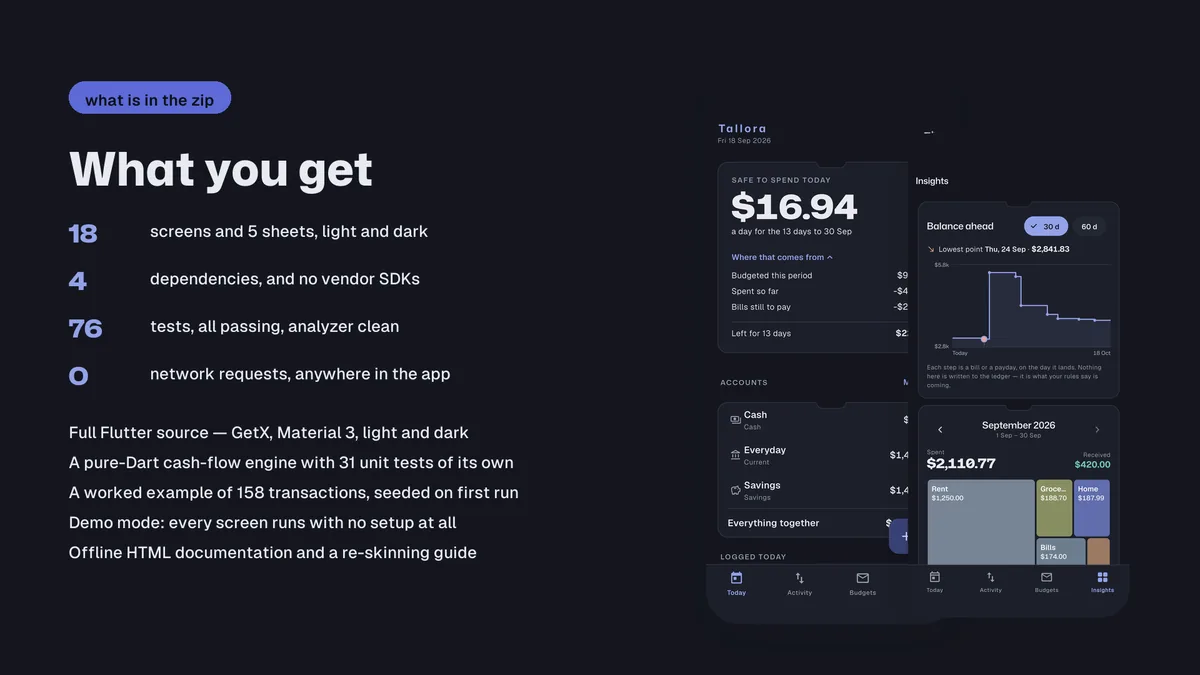
A budget tracker that leads with one daily number, safe to spend, and shows the four amounts it was calculated from.
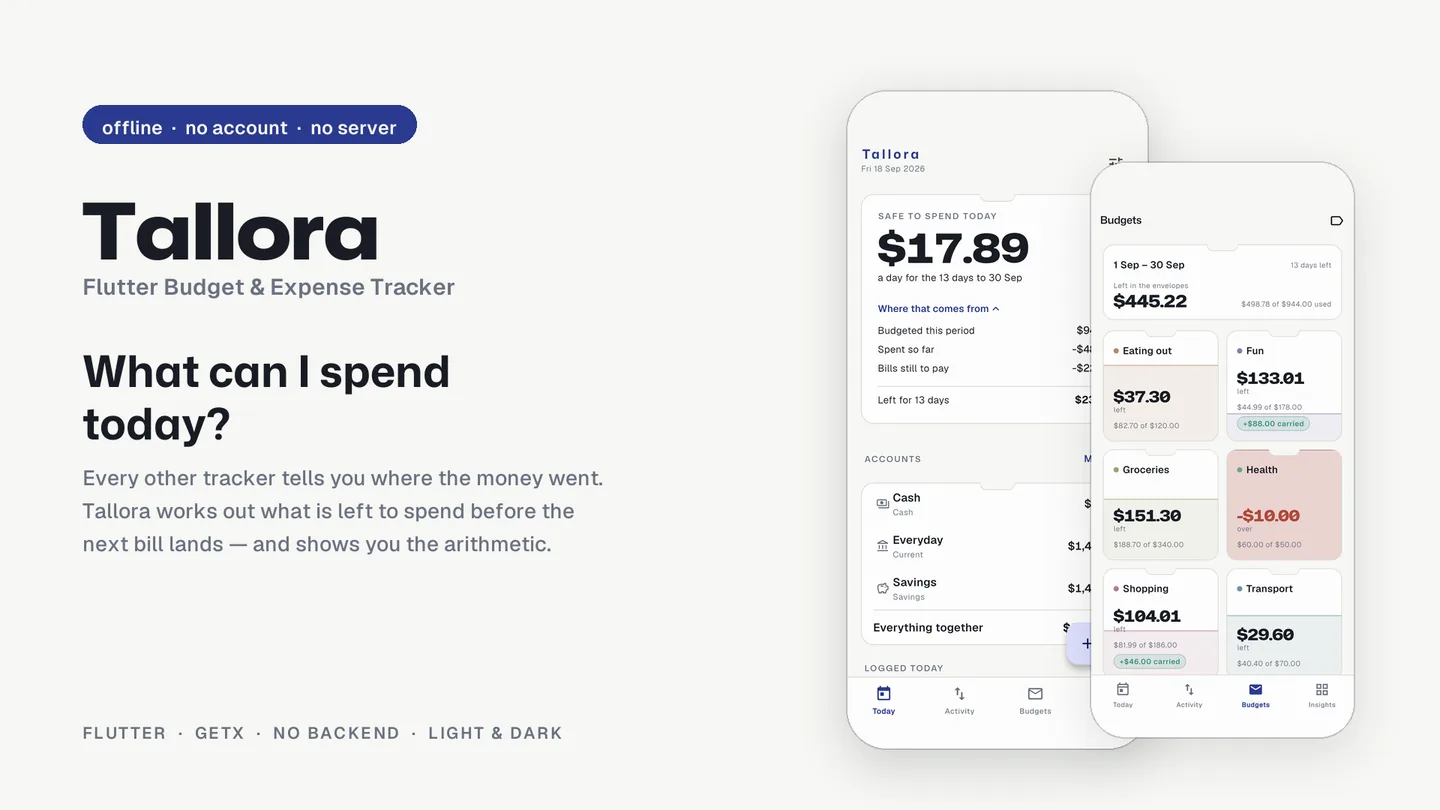
The live preview on CodeCanyon is this app compiled for the web: the real build, not a video.
Tallora is a Flutter budget and expense tracker organized around a single question: how much can be spent today. The Today screen divides what is left in this period's envelopes, after spending and upcoming bills, by the days remaining, and lists each input underneath. The math lives in a cash-flow engine written as pure Dart functions with its own test suite, so it is easy to verify and easy to change.
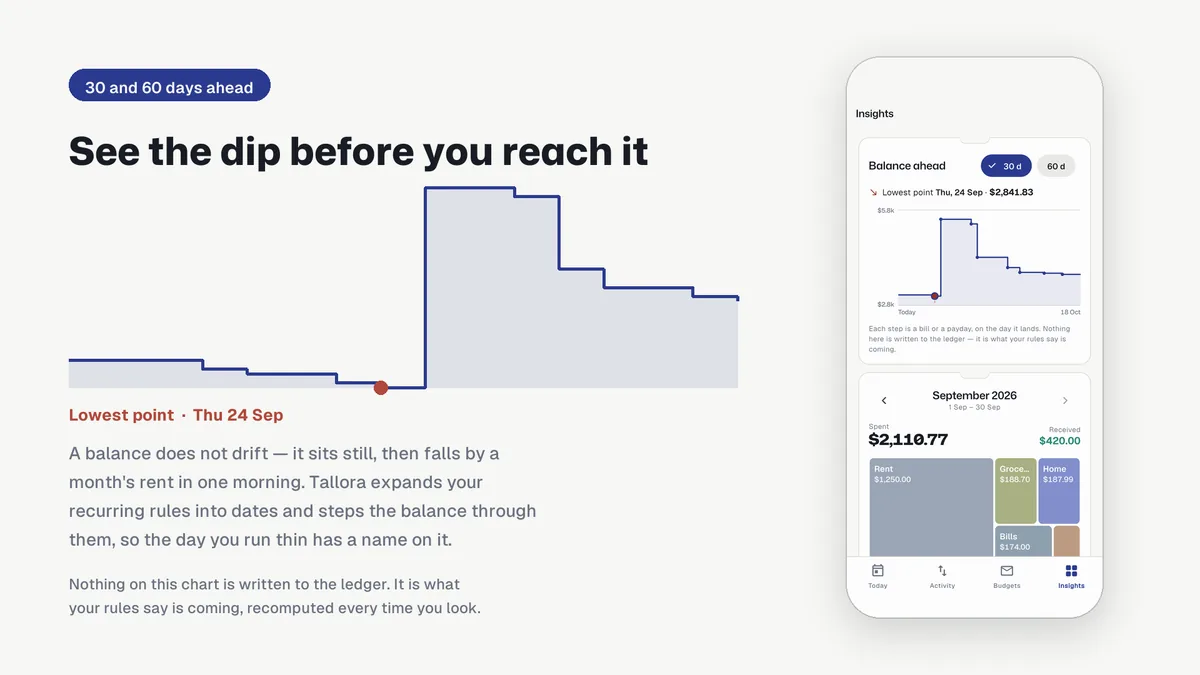
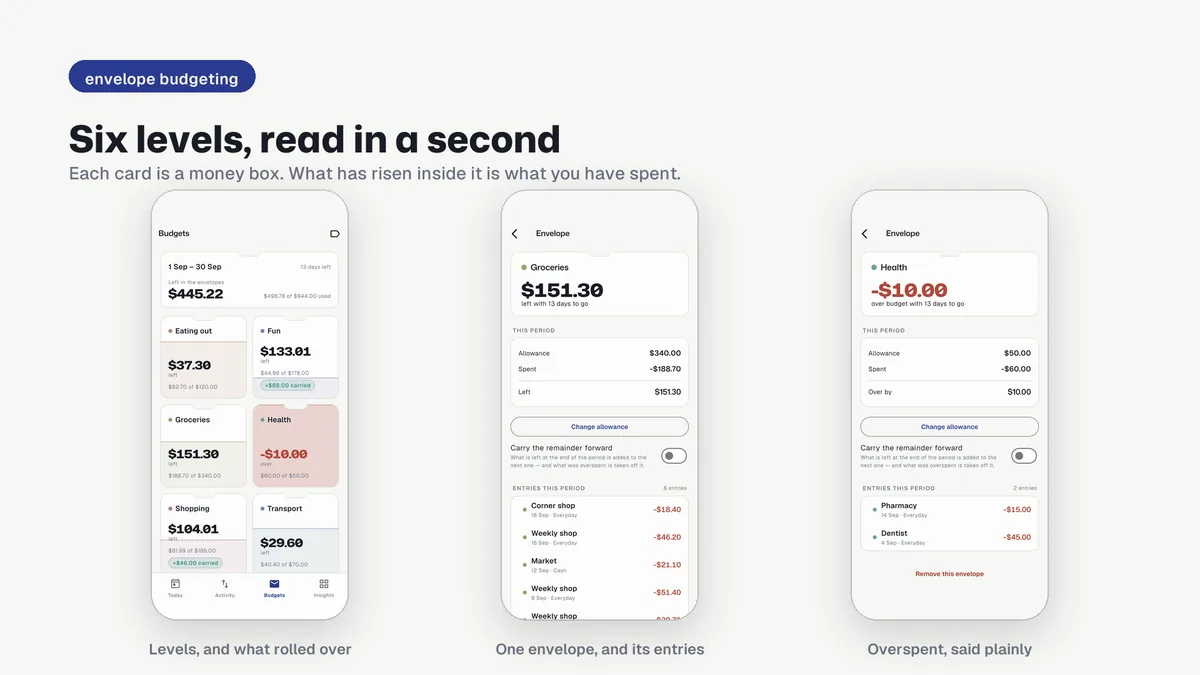
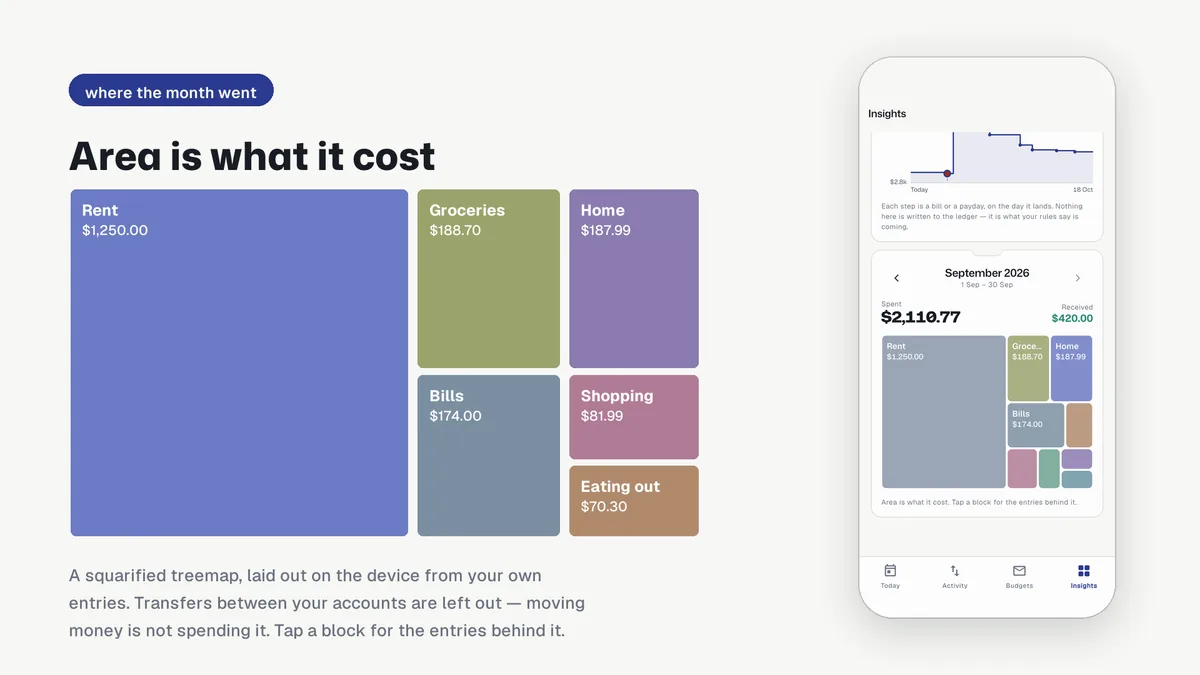
The rest of the app supports that number: envelope budgets that carry surpluses and overspends forward, a step chart of the balance over the next 30 or 60 days with its low point named, and a treemap of where the month went. The ledger stays on the phone in encrypted storage, with JSON backup and CSV export.
Features
- Safe-to-spend figure on Today with every input amount shown beneath it
- Balance projection over 30 or 60 days as a step chart, with the lowest point called out
- Envelope budgets that roll leftovers and overspends into the next period
- Squarified treemap of monthly spending that leaves out transfers between your own accounts
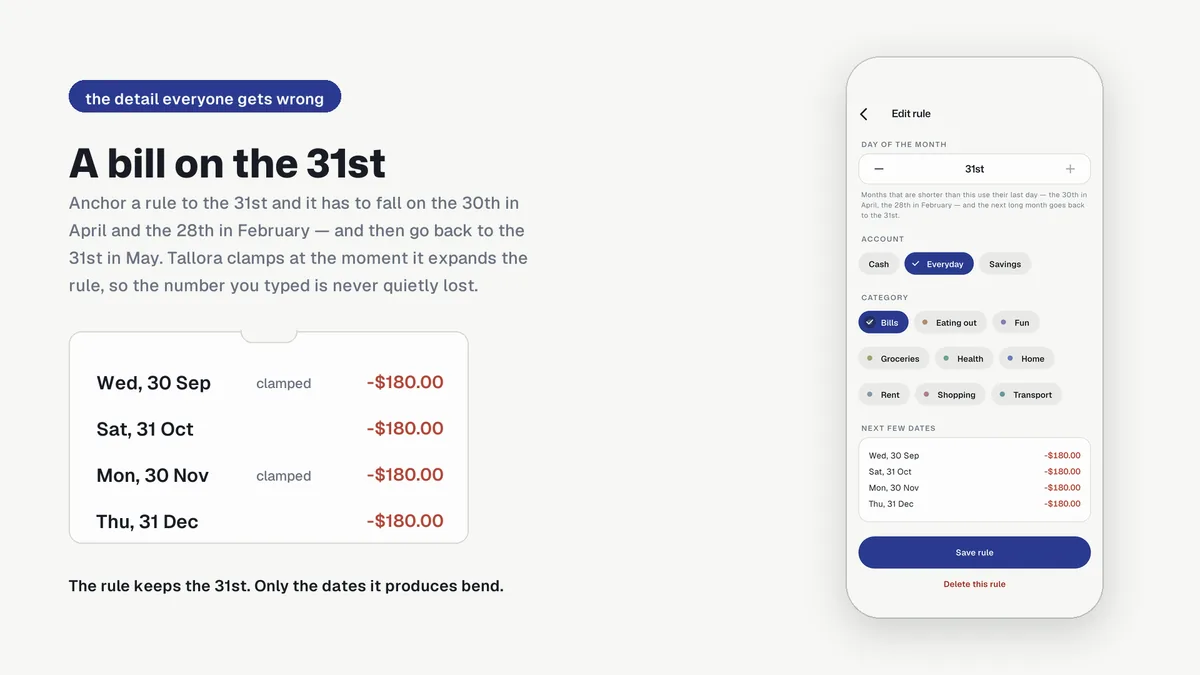
- Recurring rules on weekly, monthly or yearly cadences, with pause and resume and correct handling of short months
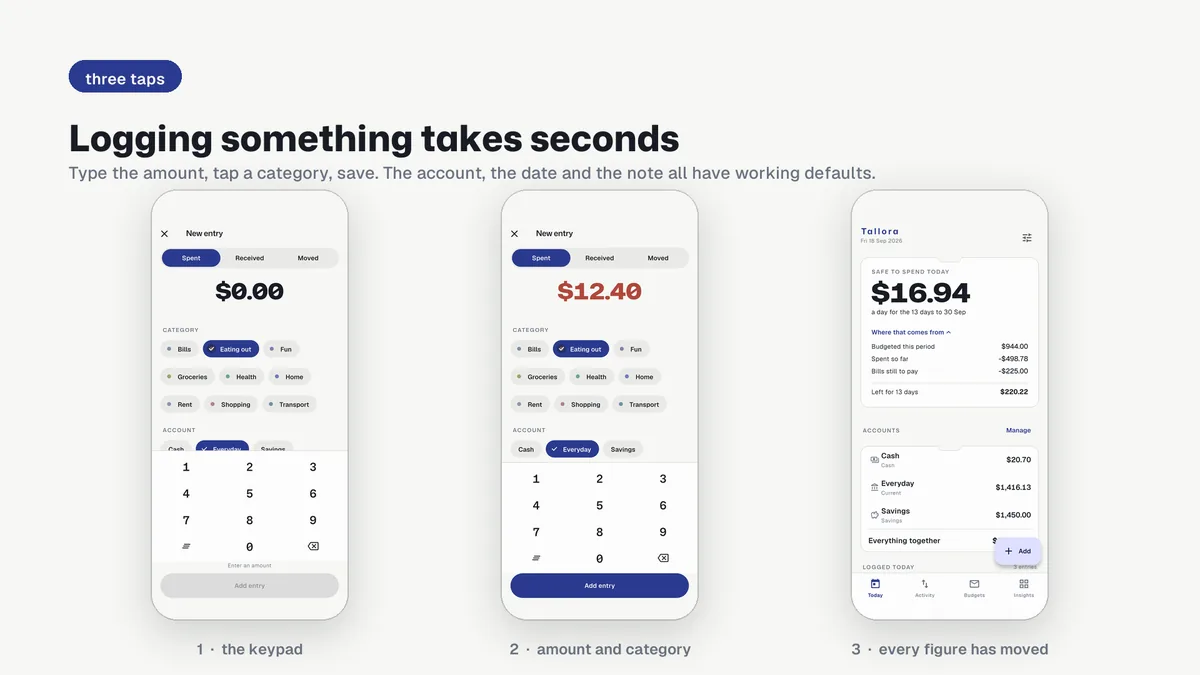
- Keypad quick entry, multiple accounts and mirrored transfers
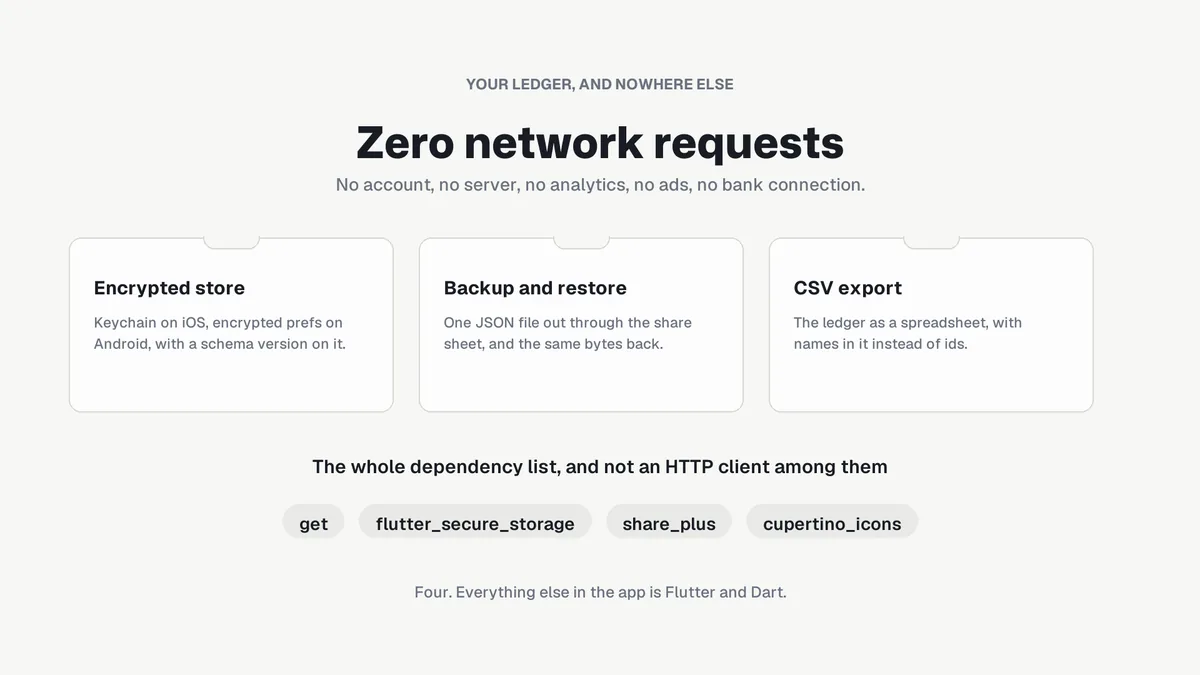
- Encrypted local ledger with a schema version for safe model changes
- JSON backup and restore through the share sheet, plus CSV export using readable names
- A sample ledger of 158 transactions seeded on first run
What it looks like
8 images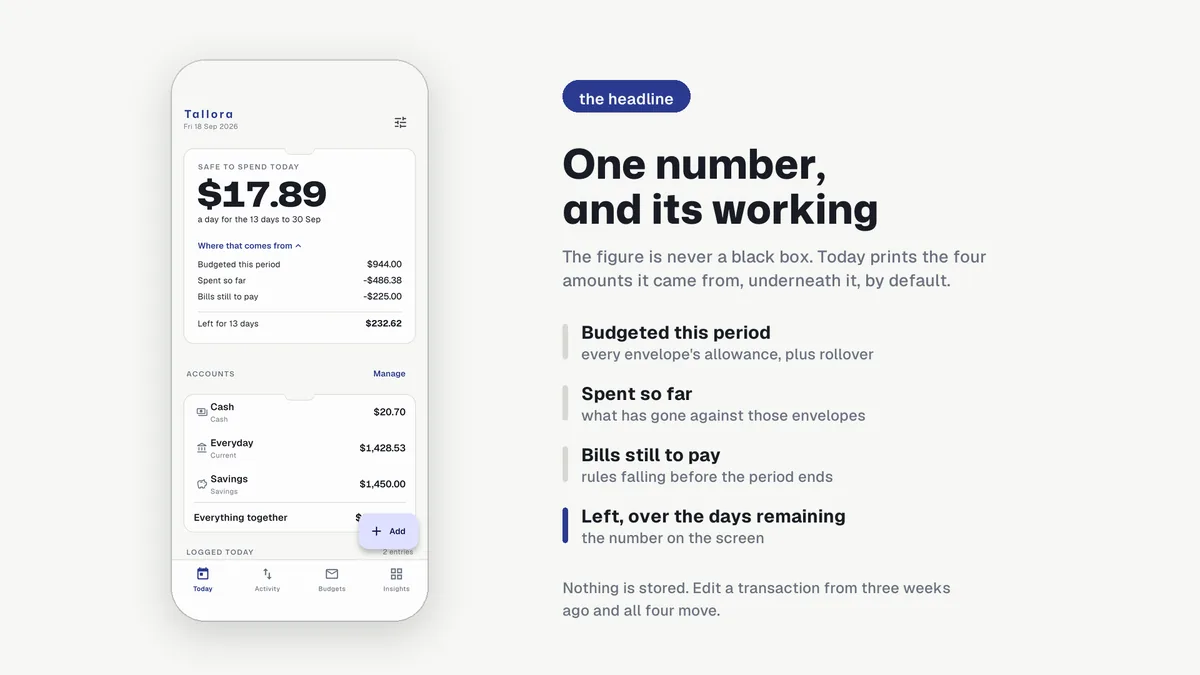
Who it is for
- You are building a personal finance app and want a working budgeting engine rather than chart mockups.
- Your users care about privacy and you want their ledger kept on the device.
- You want a demo that opens on a full, realistic ledger instead of empty states.
In the box
from the shipped zip- Full Flutter source at the top of the zip, no obfuscation and no licence server
- Offline HTML documentation: setup, re-theming, app name and bundle id, troubleshooting
- 11 Dart test files in the app
Run it after download
the app# unzip the download, then
# the app is at the top of the zip
$ flutter pub get
$ flutter runSetup, including any keys or services the app talks to, is covered step by step in the bundled documentation.
Spec
measured| Screen widgets | 19 |
|---|---|
| Dart files | 87 |
| Tests in the package | 11 |
| Dart SDK | ^3.7.0 |
| Back end | None bundled; the service layer is where yours goes |
| Platforms | iOS + Android, one codebase |
Counted from tallora-v1.0.zip, the file uploaded to CodeCanyon. Screen widgets are the view, screen and page classes in the source, so the number can differ slightly from a count of routes.
Questions
Something else? Ask on the item's CodeCanyon page; the author answers there.
How is safe to spend calculated?
It takes the period's envelope allowances, subtracts what has been spent against them and the bills still due before the period ends, then divides by the days remaining. All four amounts are shown on screen.
Where does the data live, and can users move it?
On the phone, in Keychain on iOS and EncryptedSharedPreferences on Android. Users move it with the JSON backup file, and storage goes through one LocalStore class if you want to swap in a database later.
Can I sell subscriptions in it?
The paywall screen and its limit are wired; the purchase call is a stub in SubscriptionService.purchase that you connect to your store products. The documentation walks through it.
Sold on Envato's CodeCanyon marketplace, which handles payment, VAT, invoices and the download.